
The personnel pages work in two layers. First the operator, the professional behind the role. Then the character they perform. That separation is not a branding exercise. It is how the facility keeps a session safe while letting it feel like something other than a negotiated appointment.
The character is the part the inmate meets. It is also the part that has been most carefully prepared.
A character is a list of constraints
The easy way to play an officer is to put on the uniform and be stern. It works for about twenty minutes. After that the inmate starts to notice the person underneath improvising, guessing at what an officer would say next, and the fiction goes thin.
A prepared character is different. It comes down to a short set of answers that the operator carries into the room:
- What do they want? Order, information, a clean count at the end of the shift, an inmate who learns the routine. One want, stated plainly. Officers with three wants contradict themselves.
- How do they speak? Clipped or patient. Formal address or none. Questions or only instructions. The register is decided before the session, not found during it.
- What do they notice? A strict officer notices posture. A tired one notices nothing until it is late. What a character pays attention to tells the inmate who they are dealing with faster than anything they say.
- What will they never do? This list matters most, and it is longer than people expect.
The character dossiers on the site are the public face of this work. Behind them, the preparation varies. Sometimes there is a dossier, sometimes a written script, sometimes ideas jotted down, sometimes only ideas. It depends on the situation.
What an officer may improvise
Inside the frame, a great deal. The wording of an instruction. How long a silence lasts. Whether a small act of defiance is ignored, logged or answered. When to walk past a cell without looking in. The rhythm of a shift is live, and an officer who could not adjust it to the person in front of them would be useless.
The compliance ladder gives that improvisation its shape. Resistance moves the inmate down a rung and the session changes accordingly, but the next rung is agreed in advance. The officer chooses how to play it. They do not invent a new rung on the spot.
What an officer may not improvise
Everything that touches a limit, a body or the exit.
An officer does not add a practice that was not agreed in screening, however well it would fit the scene. They do not stretch an intensity band because the inmate seems to be coping. They do not play with the stop signal, test whether it will be used, or stay in character for a single line after it has been. And they do not step outside the character to have a private conversation that belongs in the debrief.
These are not character traits. They are the rules every character is built on top of, and no dossier can override them.
“An officer who surprises the inmate is doing their job. An officer who surprises the facility is not.”
– Oberst von Halle
Why the dull ones work best
People expect the memorable officer to be the cruel one. In practice the officer who holds a session longest is usually the most ordinary. Someone doing a job. Slightly bored by it. More interested in whether the paperwork is right than in the person in the cell.
That indifference is hard to play and very effective. A dramatic officer is performing for the inmate, and the inmate knows it, because performance needs an audience. An officer who is simply working makes the inmate feel like part of the routine rather than the centre of a show. For people who came to lose their name for a while, being unimportant to somebody in uniform is much of the point.
Drama still has a place. A raised voice once in four hours lands. A raised voice every ten minutes is weather.
The uniform is the last thing added
Operators sometimes start from the costume and work backwards. The facility asks for the reverse. Work out the wants, the voice, the attention and the list of things the character will never do. Then put it in a uniform.
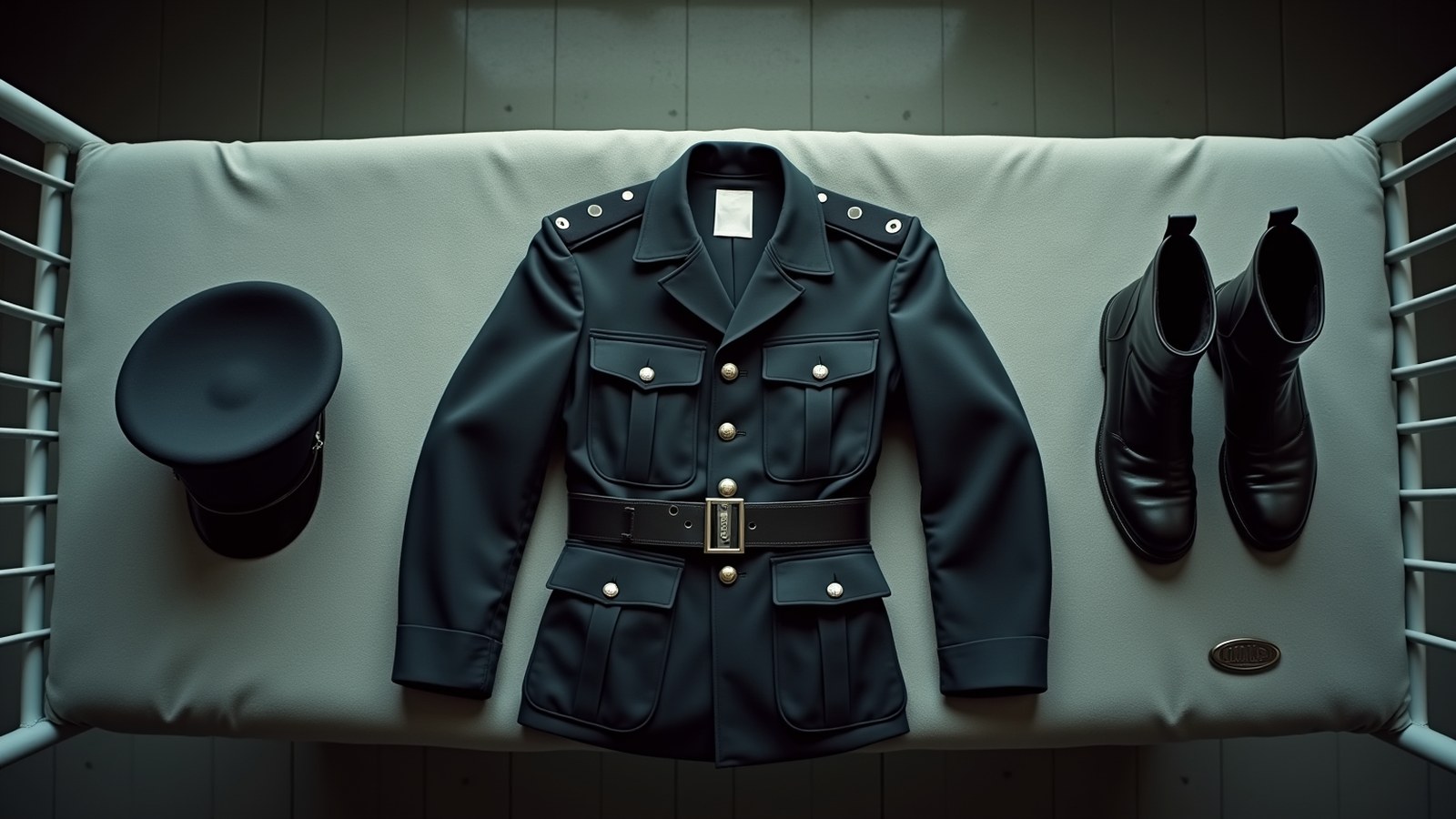
The kit matters. It is cut to fit, worn properly and kept clean, because a badly worn uniform announces a costume. But it is the frame around the character, not the character itself. Lay it flat on a bunk with nobody in it and it says nothing at all. What fills it is a set of constraints and a professional who has practised keeping to them for hours at a time.
Choose the operator first, then the character they perform. Start with Personnel and the character dossiers. What every character is built on is set out in our Safety Protocols.