
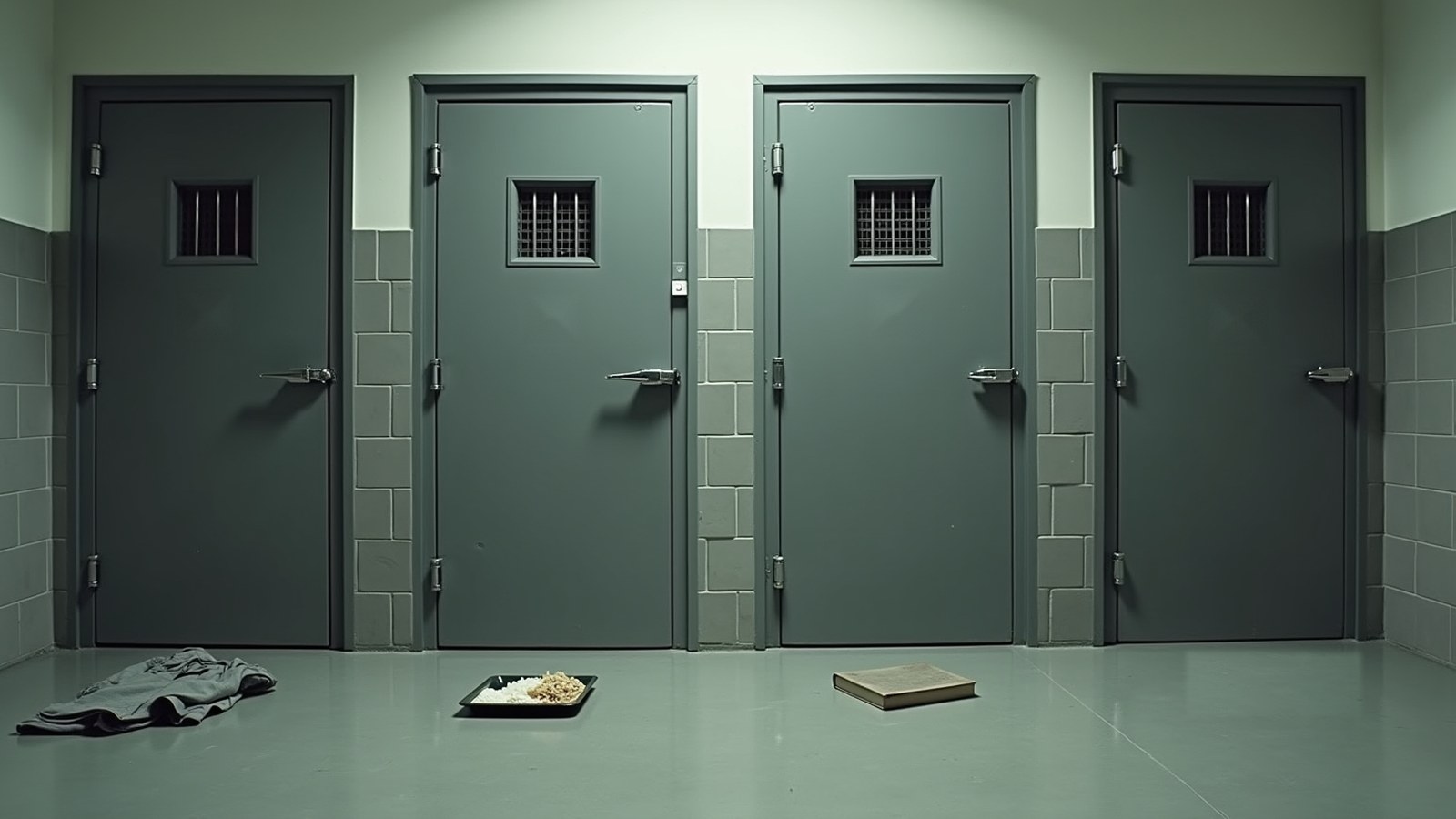
From the outside, every booking looks the same. Someone wants to be locked up for a few hours by people in uniform. The intake request names a format and a date, and the message box usually says something about wanting to experience the real thing.
Underneath that, the reasons differ a great deal, and they ask for different days. Getting the reason wrong does not usually make a session dangerous. It makes it flat, which for the person in the cell can feel almost as bad.
Most bookings fall into one of four groups. Some sit across two.
Surrender
A common group. These are people whose ordinary week is made of decisions: running a team, a household, a practice, a business. Their days are spent being the person everyone else waits for.
What they want from a cell is the absence of choice: a few hours in which nothing they decide matters, because nothing is theirs to decide. Pain and drama are beside the point. Being told when to stand, where to sit and when to speak is the relief.
For this group the procedure is the experience. Intake is long, instructions are short, and nothing is offered as an option. The worst thing an officer can do is ask them what they would like. The second worst is to make it theatrical. They need the system to be boring and absolute, and they need it to hold without them helping it along.
Endurance
These people come to find an edge. How long they can hold a position, how much cold or hunger or boredom they can sit through, how they behave on the far side of tired.
They often describe themselves as wanting it hard, and they often mean it. The care with this group is in the pacing. An endurance session that peaks in the first hour has nowhere to go and ends as a test the inmate passed easily. One that builds slowly, with the down hours used as part of the climb, finds the actual limit, and finding it is the point.
They are also the group most likely to under-use their stop signal, which is why their sessions are watched more closely rather than less. See the compliance ladder for how resistance and endurance are read without being mistaken for each other.
Curiosity
The quietest group, and the one most often new to all of it. They have read about this, thought about it for years in some cases, and want to know what it is actually like before they decide whether it is for them.
Curious inmates need the clearest frame of anyone. They benefit from the shortest format, the four-hour intake, because it shows them the whole shape of the thing without asking them to commit to a day they cannot picture. They need a session that is real enough to answer the question, and a debrief long enough to let them work out what the answer was.
Curiosity is also the motive most likely to change on the day. Someone who arrives curious sometimes discovers in the second hour that they are actually in the surrender group, and a good session lets that happen.
Repair
The group that needs the most care.
Some people come to a structured confinement to work through something that happened to them, or to take back a feeling that once belonged to a worse situation. Control that they chose, in a place with a door they can open, can do something for them that ordinary life cannot.
That is a legitimate reason to book, and the facility does not turn people away for having it. But it changes the plan more than any other motive. Screening goes slower. The exclusions are wider. The stop signal is rehearsed more than once. The debrief is longer, and the days after are discussed before the session rather than after it.
“We do not need to know why you came. We do need to know which door you will want to use if it gets too close.”
– Oberst von Halle
Why the motive gets the wrong session
One typical mismatch is a surrender inmate given an endurance day. They wanted the weight of the system and got a series of challenges, each one asking them to try harder, which is exactly the kind of effort they came to put down.
Another is the reverse: an endurance inmate given a surrender day, all procedure and quiet, who leaves feeling they were never actually tested.
Neither is rare, and neither is anyone’s fault. People often write the message box in the language of one motive while really holding another, because the second is harder to say. That is what screening is for. A few direct questions usually settle it, and the officers then build the day around the answer rather than the first description.
Two motives at once
Plenty of people sit across two groups, and curiosity with surrender is a frequent pairing. That is fine and does not need resolving in advance. The session is built for the stronger one and leaves room for the other.
What the facility cannot build is a session for all four at once. When an application wants everything, screening narrows it, and the result is a better day for the narrowing.
The three custody formats differ in length, pressure and down time – see Prisoner Experiences to compare them, and our Safety Protocols for what is fixed before any of them begins. Not sure which reason is yours? Say so in your request. That is a good place to start.